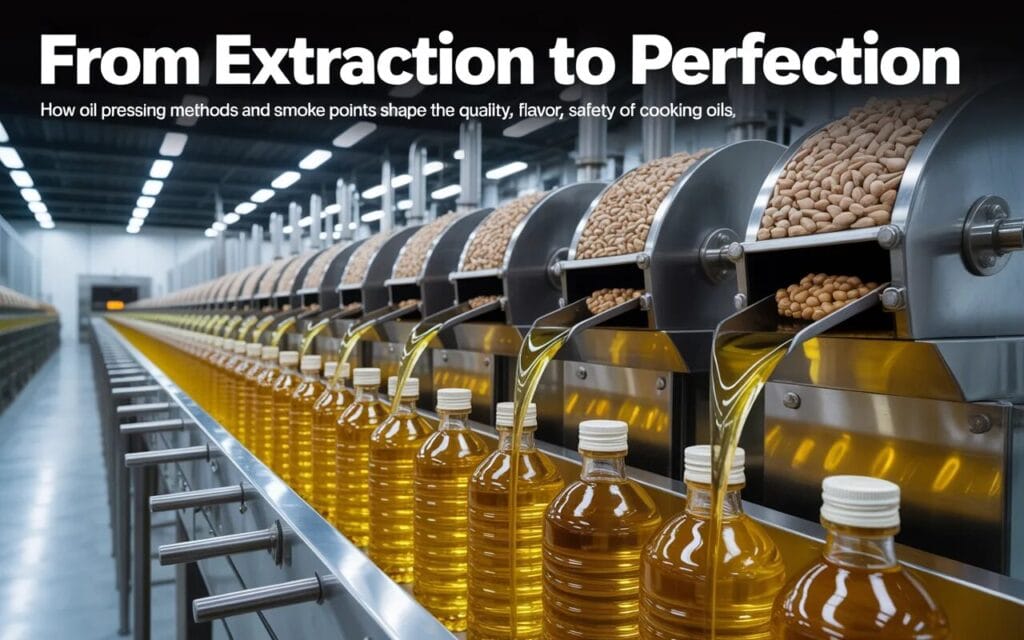
Cooking oil is a daily companion in kitchens around the world. It sizzles in frying pans, blends into salad dressings, and quietly carries flavor into almost every meal. Yet behind that simple bottle on the shelf is a long and careful journey. From the moment seeds are crushed to the second oil touches heat, every decision shapes its quality, taste, and safety.
Most people never see this process, but anyone who has walked through an oil mill knows it is a balance of science, experience, and precision. Two factors, in particular, define the final result: how the oil is extracted and how it behaves when heated. Together, they determine whether an oil is nutritious, stable, flavorful—or risky.
Why Extraction Methods Matter
Oil does not magically appear from seeds and nuts. It must be released from crops such as soybeans, sunflower seeds, peanuts, rapeseed, coconuts, and olives through controlled mechanical or chemical processes.
The way oil is extracted directly affects:
- Its color and clarity
- Its aroma and taste
- Its nutritional value
- Its shelf life
This is why professional producers carefully choose from different Extraction and pressing processes for edible oil extraction, depending on the crop, target market, and scale of production.
The Main Oil Extraction Methods
1. Cold Pressing
Cold pressing uses mechanical force at low temperatures. This method preserves the oil’s natural aroma, vitamins, and antioxidants. Many premium oils—such as extra virgin olive oil—are made this way. The trade-off is lower yield, making it ideal for high-quality, small-batch production.
2. Hot Pressing
Hot pressing applies heat before or during pressing. This increases oil yield and improves extraction efficiency. While some nutrients may be reduced, the method is widely used in commercial production because it balances volume and cost.
3. Solvent Extraction
Solvent extraction uses food-grade solvents like hexane to dissolve oil from the raw material. It delivers the highest yield and is common in large factories. The oil is later refined to remove all solvent residues.
4. Pre-Pressing + Solvent Extraction
This hybrid process begins with mechanical pressing and finishes with solvent extraction. It is used for crops with high oil content and allows large-scale producers to maximize efficiency.
Each method leaves a different “fingerprint” on the oil—affecting flavor, stability, and how it performs in the kitchen.
How Pressing Affects Flavor and Nutrition
Cold-pressed oils often carry rich, natural flavors and retain more nutrients. Hot-pressed and solvent-extracted oils usually go through refining, which removes impurities and creates a neutral taste and longer shelf life.
This is why some oils shine in salads, while others perform better in deep frying.
Understanding the Smoke Point
Once oil is extracted, the next critical factor is how it reacts to heat. Every oil has a temperature limit where it begins to break down and release smoke. This is known as the Cooking oil fume point.
When oil exceeds this point:
- Harmful compounds may form
- Nutrients degrade
- Flavors turn bitter
Cooking above the smoke point not only ruins taste—it also affects health.
Why Smoke Point Matters in Cooking
Different cooking styles demand different oils:
- Low heat (dressings, dips): flaxseed oil, extra virgin olive oil
- Medium heat (sautéing): sesame oil, sunflower oil
- High heat (frying): refined peanut oil, canola oil, palm oil
Choosing the right oil keeps food flavorful and safe.
The Link Between Extraction and Smoke Point
Refined oils usually have higher smoke points because impurities and free fatty acids are removed. Cold-pressed oils, while nutritious, often have lower smoke points and are best for low-heat uses.
This connection shows how extraction and cooking behavior are deeply linked.
The Manufacturer Behind the Technology: GQ-Agri
Behind every high-quality oil system is a manufacturer that understands real-world production. GQ-Agri is a leading agricultural machinery manufacturer from China, trusted for delivering practical, reliable, and affordable equipment worldwide.
The company believes that small-scale farming should not mean small-scale profits. This philosophy drives their machine designs—durable, easy to operate, energy-efficient, and scalable.
From oil pressing and filtering to refining, filling, and industrial rendering, GQ-Agri supports the entire production chain. Their equipment helps farmers, cooperatives, and entrepreneurs transform raw crops into higher-value products with confidence.
They are not just building machines—they are building sustainable businesses.
Final Thoughts
From seed extraction to safe cooking temperatures, every stage shapes oil quality. By understanding the Extraction and pressing processes for edible oil extraction and respecting the Cooking oil fume point, producers and consumers alike can make smarter, healthier choices.
With the support of innovative manufacturers like GQ-Agri, the future of cooking oil is cleaner, safer, and more sustainable.
